















European Parliament elections in Lithuania are unpopular, especially if they are not held in conjunction with a presidential election, as will be the case this year. Why is this the case?
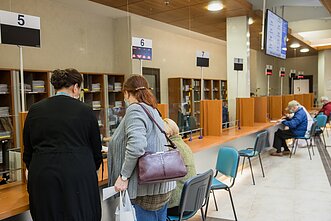
The EP elections will take place on June 9 in Lithuania. Vilnius residents say there is still time before the elections, so they do not take much interest in them. Moreover, people admit that they know little about the current Lithuanian MEPs.
“Our representatives are not very good. [...] Not all of them, but there are some who are very successful in putting money in their own pockets,” a Vilnius resident told LRT TV.
“The EP is seen as a less important institution because the whole legal structure of the European Union is complicated, with European Commission, Council,” another man says. “Apparently, people think that local problems are more important, when in fact the problems that affect all countries are probably even more important.”
Political analysts say that parties could pay more attention to voters because so far, there is little information about the candidates in the EP elections and their programmes.
“The focus is primarily on the presidential elections, and we can hope that after the presidential elections, there will be some intensification in campaigning both on the part of the parties and the candidates,” said Ieva Petronytė-Urbonavičienė, head of the Civil Society Institute.
“On the other hand, there are three elections in one year, and the parties are probably dividing resources and concentrating on those that seem more important,” she added.
This year, Lithuania is electing its president, parliament, as well as voting in the EP elections.

According to Mažvydas Jastramskis, an associate professor at Vilnius University’s Institute of International Relations and Political Science, active elections are not expected.
“The only EP elections which were held not in conjunction with a presidential election in 2009 had a very low turnout – just under 21 percent. And given that the elections are held in the summer, there is and will be naturally less attention paid to them,” he noted.
According to Petronytė-Ubonavičienė, the Lithuanian parties’ attitude toward the EP elections also has to do with low voter turnout.
“There is an attitude here that we send those who are most deserving in the party to the EP, and they withdraw from the national context to less active politics that does not require daily attention,” she said.
EP elections in Europe, especially in donor countries, attract much more interest. According to Jastramskis, there is no intense struggle between Lithuanian parties, as everyone has a similar attitude towards the EU and Eurosceptic views are not popular.

Newsletter
Every Friday morning.